
Evidence in a Homicide Case: Arkansas Guide
Evidence in a homicide case can include physical traces, digital records, witness accounts, expert analysis, and video. In Arkansas, the meaning of any one item depends on how it was collected, what it actually shows, and how it fits with other information. An allegation or a single test result does not, by itself, establish what happened.
Contact an Arkansas homicide defense lawyer to discuss the next step. Call 501-424-7114.
What does evidence in a homicide case include?
Evidence is information a prosecutor or defense may use to support or challenge an account of events. It can come from objects, people, devices, records, or testing. Investigators may assemble a large file, but the important questions include whether each item is reliable, lawfully obtained, properly preserved, and consistent with other evidence.
The same item can have limits as well as value. A fingerprint may indicate contact but not necessarily when it occurred. A witness may remember an important detail but be uncertain about another. Evidence should be considered in context rather than treated as a verdict on its own.
Families often hear terms such as forensic, digital, or circumstantial evidence before they can see the full record. Those labels do not automatically tell you whether an item proves or disproves a particular fact. The defense must understand the underlying material, the method used to obtain it, and any information that points in a different direction.
- Source:
Who found, created, recorded, or collected the information?
- Integrity:
Was it preserved and documented without unexplained changes?
- Meaning:
What can it show, and what cannot reasonably be inferred from it?
- Context:
Does it agree with or conflict with other available information?
- Use in court:
Are there questions about admissibility, interpretation, or fairness?
To understand how evidence fits into a defense, readers can review the firm's murder defense options and learn more about the attorney through Kevin Lemley's background. A charge describes an accusation and its legal framework; it does not answer what the evidence will establish.
How is forensic evidence examined?
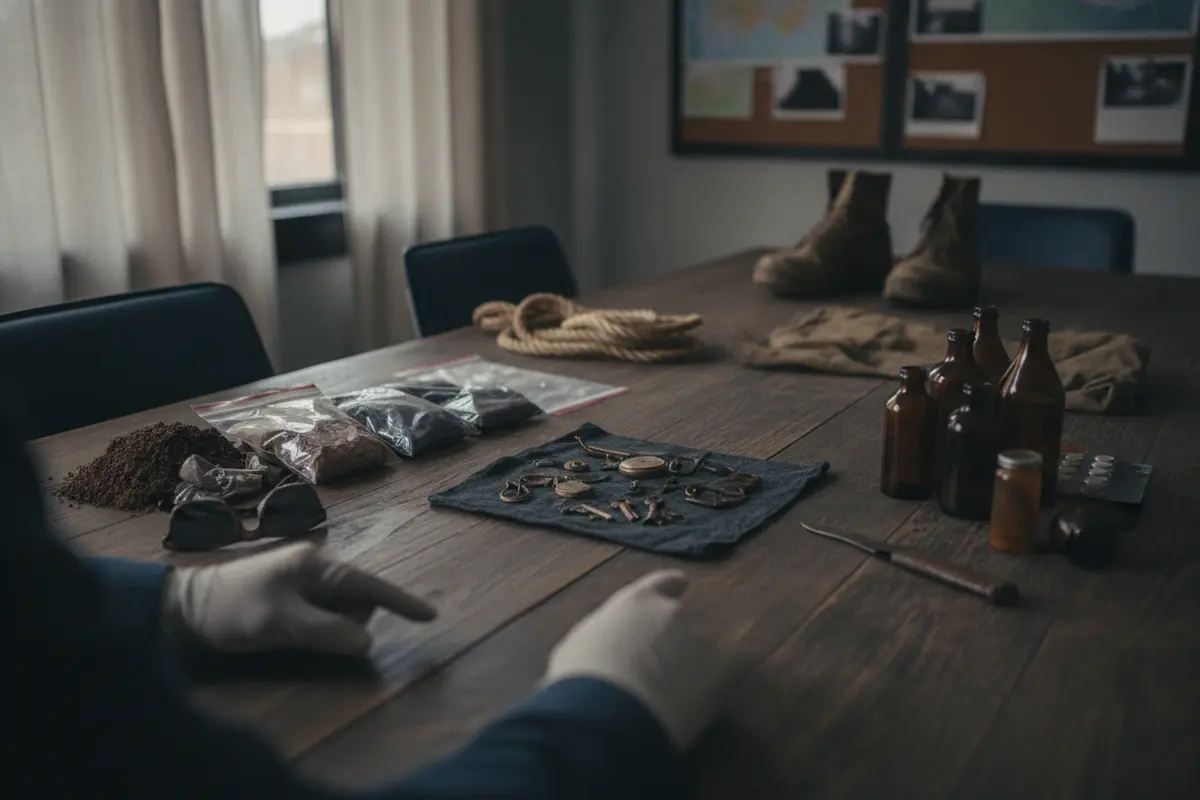
Forensic evidence refers to physical material collected and examined through scientific or technical methods. Depending on the circumstances, investigators may look at DNA, fingerprints, trace material, firearm-related evidence, bloodstain patterns, or other items. The value of a finding depends on collection, testing, interpretation, and whether the method addresses a real disputed question.
A lab result is not a complete story. A report may identify a possible source or association, but it may not establish when material was deposited. How it arrived at a location, or what a person intended. A careful review looks at the underlying data and the limits stated by the analyst, not just a short summary of the conclusion.
Collection and chain of custody
Investigators generally document where an item was found, who handled it, how it was packaged, and where it was stored. Gaps or inconsistencies in those records may raise questions about identity, contamination, or whether the item remained in the same condition. A paperwork problem does not automatically make evidence unusable, but it may affect how confidently it can be interpreted.
Testing, interpretation, and missing context
Testing can produce results that require judgment. A mixture of biological material may be difficult to interpret. A fingerprint comparison or firearm examination may involve conclusions based on a particular method and quality of samples. Counsel may examine lab notes, photographs, bench records, instrument data, validation information, and the analyst's explanation of limitations, where those materials are available and appropriate.
It is also important to consider what was not tested or documented. Was a relevant object preserved? Were alternative explanations considered? Did the report distinguish a result from an inference? These are questions for case-specific review, not assumptions that any test was faulty.
For example, a DNA result that associates a person with an object does not necessarily establish when or why the contact happened. A trace finding may be consistent with more than one account. Conversely, the absence of a detectable trace does not always establish that contact never occurred; the result may depend on the sample, collection, and testing conditions. The practical question is what the particular test can responsibly support, given the circumstances and all available records.
Evidence can also raise a legal question separate from its scientific meaning: whether the material may be presented in court and for what purpose. In the historical federal case Carver v. United States, the Supreme Court addressed a declaration offered under a then-recognized dying-declaration theory. That 1896 decision is not a statement of current Arkansas law. It illustrates only that the legal basis for receiving particular evidence is a distinct issue from what an item appears to show.
Firearm-related evidence may include projectiles, cartridge cases, toolmarks, or residue testing. Such evidence can help investigate a sequence of events, but its limits depend on the item and the examination. For more background on one distinct topic, see the firm's article about ballistics and gunshot residue in Arkansas homicide cases.
What can digital records show?
Digital evidence may include phone data, text messages, call logs, photographs, location information, social media content, vehicle or doorbell camera recordings, and records from online services. It can help establish timing, communication, or possible movement, but a digital record is not self-explanatory. Its meaning depends on the source, completeness, time settings, and surrounding activity.
Preserve original data when possible. A screenshot may capture what appeared on a screen, yet it may omit surrounding messages, account details, or metadata. A downloaded copy can also differ from a provider's original record. Families should avoid editing, deleting, resetting, forwarding, or posting potentially relevant material before receiving case-specific advice.
Phones, accounts, and messages
A phone may contain messages, photographs, contacts, and application data. Different people may use a shared device or account. A message's displayed name is not always proof of who sent it, and a timestamp may depend on a device setting or time zone. Investigators and counsel may need the original device, available extraction records, and account-level context to evaluate what a record can reliably show.
Do not guess passwords, enter someone else's account, install recovery software, or try to bypass a device lock. Those actions may create legal and technical problems. If a family member lawfully possesses a relevant device, keep it secure, note who has had access, and ask counsel how to preserve it without changing its contents.
Location data and online activity
Location information can be imprecise. A record may indicate an area or a connection to a particular network rather than a person's exact position at a particular moment. Interpretation can also depend on which device generated the data, whether the account was shared, and how the provider records or retains information.
Online posts may be incomplete, altered, or presented without the conversation around them. Save what is lawfully accessible in its original context, including the full URL and date viewed, but do not contact witnesses or publish commentary about the case. Counsel can decide how to preserve or request additional records through lawful channels.
How should witness statements be evaluated?
Witness accounts can offer firsthand observations, background, or information about what happened before or after an event. They can also differ because people saw different things, had limited opportunity to observe, or remembered events over time. A careful review considers the exact statement, the conditions of observation, and any changes or uncertainty rather than reducing it to a label like reliable or unreliable.
Small details can affect how an account is understood. Relevant questions may include lighting, distance, duration, stress, obstruction, the witness's attention, and whether the account was recorded soon after the event. Counsel may compare initial statements with later interviews, written reports, recordings, and other available evidence.
Memory is not a recording. A witness may be confident and still mistaken about a detail, or may be unsure while accurately recalling another. Confidence alone does not settle accuracy. The timing and wording of questions, exposure to other accounts, and any opportunity to discuss the event can also matter to an evaluation.
Families should not try to interview witnesses, coordinate accounts, or ask anyone to change a statement. Even a well-intended conversation can create misunderstanding or raise concerns about interference. Write down the name and contact information of a person who voluntarily shares information, along with when and how the contact happened, then give that information to counsel.
The firm's resources on eyewitness testimony in Arkansas murder cases and how homicide investigations are conducted discuss related issues. Each case still turns on its own record and circumstances.
What role can expert testimony play?
Experts may explain specialized subjects such as laboratory testing, pathology, digital examination, firearms, or other technical issues. An expert can help translate complex material, but expert status does not make every opinion conclusive. The basis for the opinion, available data, methods, assumptions, and limits all matter when deciding how much weight to give it.
Independent review asks focused questions. It is not simply a search for someone who agrees with one side. A qualified reviewer may assess whether the underlying material supports the stated conclusion, whether an alternative explanation should be considered, and whether the report communicates uncertainty accurately.
Depending on the case, counsel may consider whether another specialist should examine preserved material or review the methods and records. That decision can depend on whether suitable samples remain, access to underlying data, the disputed issue, time constraints, and the cost or legal process involved. Families should not commission testing or send evidence to a laboratory without speaking with counsel; doing so can affect evidence integrity or create avoidable complications.
For more on the subject, see the firm's discussion of expert witnesses in Arkansas murder trials. This general overview cannot determine whether a particular expert is needed or whether a particular opinion will be admitted.
Why does surveillance footage need prompt attention?
Surveillance recordings may come from businesses, homes, vehicles, public locations, or privately operated cameras. Video can help establish that a person or vehicle appeared at a place, or show part of an event. It may also be incomplete, low quality, poorly timed, or aimed away from the relevant action. Prompt identification matters because some systems overwrite recordings on a short cycle.
Ask counsel about preservation quickly. A family member may note the location of a camera, the business or property manager, the date and approximate time range, and any visible camera direction. Do not trespass, take a device, or access a system without permission. Counsel can assess how to request preservation and obtain material lawfully.
When reviewing a video, the original file and the circumstances of its creation matter. A phone recording of a playback screen, for example, may not preserve the full quality or metadata of the original. Investigators may need to understand the system's clock, camera coverage, recording gaps, export process, and whether the clip has been edited or compressed.
Video should also be compared with other records instead of treated as a complete account. A camera may capture only a narrow field of view. A time display may be inaccurate. An absence from one camera's view does not prove a person was not nearby. The correct interpretation depends on coverage and context.
How can families preserve records lawfully?
Families can help by keeping relevant information intact and organizing what they already have lawful access to. The aim is preservation, not investigation: do not alter potential evidence, contact witnesses to shape accounts, or publish conclusions. Share concerns with defense counsel promptly so counsel can decide what should be preserved, requested, or independently reviewed.
Use this checklist as a starting point, not a substitute for legal advice.
- Keep original items safe.
Do not clean, repair, discard, or move a potentially relevant object unless necessary for immediate safety. Note its current location and who has handled it.
- Preserve devices and records.
Do not erase messages, reset a phone, delete accounts, edit photographs, or modify files. Avoid creating new copies with editing tools.
- Document where information came from.
Record who provided a file or item, when it was received, and how it was transferred. Keep original emails and attachments where possible.
- Identify video sources promptly.
Write down the address or business name, camera location if known, date, time range, and a contact person. Do not enter restricted areas or access private systems.
- Make a neutral timeline.
Note dates, times, and events from personal knowledge. Label uncertainty clearly; do not fill gaps with guesses or combine separate people's recollections.
- Keep communications private.
Avoid public posts, group speculation, and direct messages to witnesses about what they should say. Ask counsel how to handle questions from others.
- Share information with counsel.
Provide the organized notes and explain any steps already taken. Do not assume that a screenshot or copied file replaces the original.
The firm's page about challenging forensic evidence and its guide to the Arkansas murder trial process offer additional context. Rules and deadlines depend on the case, and counsel should address specific preservation requests.
How do evidence categories compare?
Different evidence categories answer different questions, and none is automatically decisive. This comparison is a practical way to organize an initial review: identify the source. What it may establish, what can limit its meaning, and what needs to be preserved or checked. The case-specific record,not a category label,determines what conclusions can fairly be drawn.
Evidence type. | May help examine. | Questions and limitations. | Preservation or review focus. |
Forensic material. | Possible contact, source, or physical sequence. | Collection, contamination, mixed samples, method limits, and alternative explanations. | Packaging and handling records, lab notes, photographs, underlying data. |
Digital records. | Communication, activity, or possible timing and location. | Shared accounts, time settings, missing context, incomplete extraction. | Original device or file, metadata, account context, access history. |
Witness statements. | Personal observations or events surrounding an incident. | Viewing conditions, memory, uncertainty, changed accounts, influence from others. | Initial and later statements, recordings, dates, neutral contact notes. |
Expert analysis. | Meaning of technical material or methods. | Assumptions, data quality, methodology, scope, and stated uncertainty. | Reports, source data, method documentation, preserved samples. |
Surveillance video. | What a camera recorded within its field of view. | Coverage gaps, image quality, clock accuracy, compression, overwrite cycles. | Prompt preservation request, original export, system and timing information. |
How should evidence in a homicide case be reviewed?
Independent review can be useful when an important conclusion depends on technical evidence, but it should be tied to a clear question. A lawyer can assess what records exist, what material is available, whether an expert is appropriate, and how a review fits into the case. No category of evidence or independent opinion guarantees a particular outcome.
At an initial consultation, ask how the evidence will be evaluated. Families may find it helpful to ask:
Which evidence categories appear most important, and what is not yet known?
What original items, reports, recordings, or data should be preserved immediately?
Are there deadlines or lawful requests needed to preserve video or digital records?
Would independent forensic or technical review address a specific disputed issue?
What material can the family safely gather, and what should be left untouched?
How will counsel explain uncertainty, conflicting accounts, and possible limitations?
The firm's pages on murder defense strategies and what may happen after an Arkansas murder arrest address related stages of case review. For information about the attorney, see Arkansas Murder Lawyers. The best questions will depend on the charge, the evidence collected, and the procedural stage.
Contact Arkansas Murder Lawyers to discuss a case or call 501-424-7114.
Frequently asked questions
Families may have immediate questions about what a report means, whether evidence can be reviewed again, and what they should do with records already in their possession. The answers below are general information only. A defense lawyer who reviews the case materials can explain which issues matter and what action is appropriate in that case.
Does forensic evidence prove who committed a homicide?
Not by itself in every situation. A forensic finding may support an inference, but its meaning depends on the item, method, quality, context, and other evidence. A report should be read for its actual conclusion and limitations rather than treated as a complete account.
Can a family member preserve a phone or video recording?
A family member may preserve material they lawfully possess, but should avoid editing, deleting, accessing another person's account, or changing a device. Record where the material came from and ask counsel how to keep it intact and make any further request lawfully.
Should relatives contact witnesses to get their side of the story?
They should not pressure, coach, or coordinate with witnesses. Even an informal conversation may create confusion or raise concerns. Note a witness's contact information and any unsolicited information, then provide it to counsel.
Can an independent expert review the prosecution's forensic work?
In some cases, counsel may consider a qualified independent review. Whether it is feasible or useful depends on the disputed issue, available records or samples, appropriate expertise, and the legal process. A review is not a guarantee of a different conclusion.
Does video show everything that happened?
No. A camera records only what falls within its field of view and may have gaps, low resolution, or an inaccurate clock. The original recording, system information, and other evidence help place a clip in context.
Important legal information
This article provides general educational information, not legal advice, and does not create an attorney-client relationship. Evidence rules and procedures are fact-specific and may change. Anyone facing an Arkansas homicide investigation or charge should seek advice from a lawyer about the particular circumstances and should not rely on this article to decide what to say or do.

Comments