
Challenging Forensic Evidence in Arkansas Murder Cases
Updated: Sep 14
Forensic evidence can look conclusive in a police report or courtroom presentation, but a test result is not the same as proof of guilt. DNA, firearm comparisons, gunshot residue, phone records, surveillance, and expert opinions all depend on how evidence was collected, preserved, tested, interpreted, and explained.
Challenging forensic evidence in Arkansas murder cases means examining the reliability, chain of custody, scientific method, and connection of each result to the alleged offense. A defense team can test those issues through investigation, expert review, motions, cross-examination, and comparison with the complete case record.
The right review is specific to the evidence, the alleged timeline, and the State's theory. A defense team may look for contamination, transfer, incomplete digital acquisition, unsupported conclusions, missing documentation, or constitutional problems with how information was obtained. The goal is not to reject science automatically. Instead, the review should determine what a result actually proves, what it does not prove. And whether the jury is being asked to draw a conclusion the testing cannot support.
For a broader look at case preparation, read Arkansas murder defense strategies and trial preparation. The forensic issues below are general information. The facts of an individual case must be reviewed by counsel.
What Types of Forensic Evidence Are Used in Arkansas Murder Trials?
Forensic evidence in an Arkansas murder trial may include biological samples, firearms analysis, gunshot residue, autopsy findings, digital records, video, and crime-scene reconstruction. Each category can provide useful information, but none is automatically conclusive. Collection, testing, documentation, chain of custody, and the limits of the result all matter.
Common categories include:
- DNA evidence:
Investigators may test blood, saliva, skin cells, hair, or other biological material. Mixtures involving several people can require careful interpretation, especially when the result depends on assumptions or statistical software.
- Firearms and toolmarks:
An examiner may compare bullets, cartridge cases, markings, and a suspected weapon. The defense can examine the condition of the evidence, the comparison method, the documentation, and the strength and limits of the conclusion.
- Gunshot residue:
Particles may be collected from hands, clothing, or nearby surfaces. GSR can be affected by transfer, handling, contamination, and environmental background particles. A positive finding does not by itself establish when or how a person encountered the particles.
- Pathology:
An autopsy and medical examination may address the cause and manner of death, the location and nature of injuries, and possible timing. Those opinions should be considered alongside medical records, scene evidence, witness accounts, and other known facts.
- Digital evidence:
Phones, computers, vehicle systems, messages, photographs, location data, and online accounts may be examined. Reliability can depend on how data was acquired, preserved, interpreted, and documented.
- Surveillance and reconstruction:
Video, photographs, measurements, trajectories, bloodstain patterns, and physical locations may be used to propose what happened. Recording quality, measurements, assumptions, and timeline gaps can affect the proposed reconstruction.
Chain of custody connects an item or data collected during an investigation with the evidence presented in court. Review may focus on who handled it, how it was packaged, where it was stored, whether it was contaminated, and whether laboratory or extraction records are complete. It may also be important to separate an observation from an interpretation. A report can accurately describe a test result while still leaving room to dispute the conclusion drawn from it.
Takeaway: The meaningful question is not simply whether forensic evidence exists. It is whether the evidence was collected, preserved, tested, and interpreted through a reliable process, and whether it actually connects the defendant to the charged conduct.
How Defense Lawyers Challenge Forensic Evidence in Arkansas Murder Cases Through DNA Review
DNA evidence can be challenged by examining how a sample was collected, preserved, tested, interpreted, and connected to the alleged offense. A reported match does not answer every question by itself. The significance of a result depends on the complete record, including laboratory documentation, expert methodology, sample context, and alternative explanations.
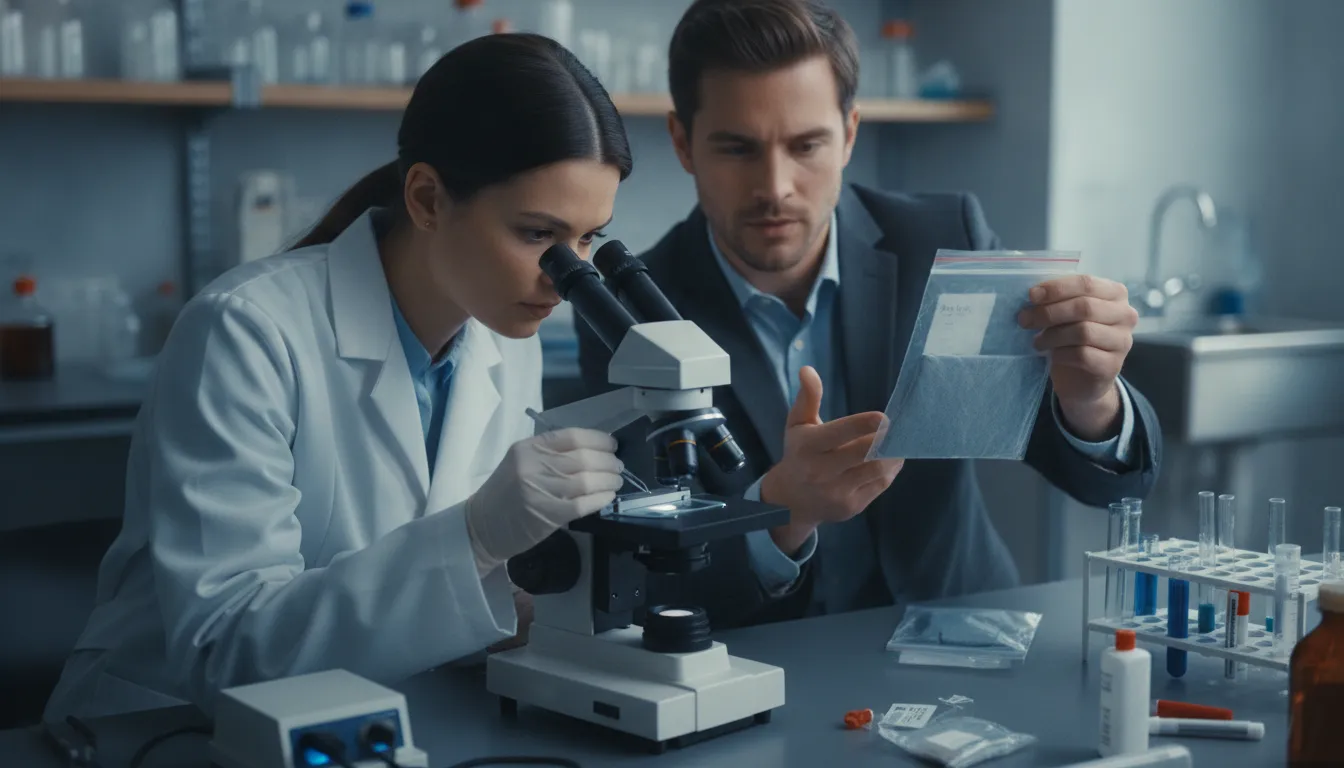
The first review often focuses on collection and contamination. Investigators should document who handled an item, when it was packaged, how it was sealed, and where it was stored. Counsel can compare those records with the condition of the evidence and the laboratory's protocols. Questions may arise if protective procedures were inconsistent, packaging was compromised, the sample was exposed to other people. Or the alleged transfer could have occurred before or after the event under investigation.
DNA on an object is not always a timestamp. A person's genetic material may have arrived through direct contact, indirect transfer, ordinary prior contact, or another explanation consistent with the surrounding facts. The defense may ask whether the State's interpretation accounts for where the sample was found. Whether the item was commonly handled, and whether the proposed explanation fits the rest of the evidence.
Mixed samples and statistical interpretation
A mixed sample may contain genetic material from several people. The analyst must explain which contributors were considered, what assumptions were used, whether the data was complete, and how alternative explanations were evaluated. The defense may also examine thresholds, input data, validation studies, and the limitations of probabilistic software.
The NIST report on DNA mixture interpretation discusses the need for transparent, documented foundations for forensic software and methods. That does not decide a particular Arkansas case. But it illustrates why a defense review should examine the method rather than treating a likelihood ratio as a simple yes-or-no identification.
Laboratory records and quality controls
A complete review may include bench notes, instrument records, analyst training, proficiency testing, quality-assurance findings, corrective-action reports, controls, and communications about the testing. Counsel may ask:
Was the sample collected and packaged using appropriate procedures?
Does the chain of custody account for each transfer and storage step?
Did laboratory controls reveal contamination or an unexpected result?
Does the report state uncertainty, assumptions, and limitations clearly?
Takeaway: A DNA challenge is not limited to arguing that a final laboratory conclusion is wrong. It can test the entire path from collection through interpretation, expert testimony, and the conclusion the prosecution wants the jury to draw.
Ballistics and Gunshot Residue: Common Defense Challenges
Ballistics and gunshot residue may be important parts of the State's theory, but neither automatically establishes who fired a weapon or when a person handled it. A careful review examines collection, transfer, testing, documentation, and interpretation, then considers whether the findings fit the complete timeline and other evidence.
In a firearms comparison, an examiner may compare markings on bullets or cartridge cases with test fires from a suspected weapon. The defense can ask whether the item was properly identified, whether the comparison process was documented. Whether the samples were suitable, and whether the conclusion goes beyond what the images and notes support.
Evidence | What the State may argue | What the defense examines |
Ballistics or toolmarks | A bullet or casing has markings consistent with a particular firearm. | The item's condition, comparison images, method, examiner notes, documentation, and the strength and limits of the conclusion. |
Gunshot residue | Particles suggest a person fired a weapon, was near a discharge, or handled an item carrying residue. | Collection timing, technique, packaging, transfer opportunities, background particles, laboratory procedures, and stated limitations. |
GSR is especially dependent on circumstances. Particles may transfer between people or objects. Contact with an officer, vehicle, firearm, clothing, or another surface may matter. The time between an alleged discharge and collection may also matter, as can whether the person washed. Changed clothing, touched other objects, or moved through an environment with similar particles.
Research has recognized that some particles associated with GSR can be difficult to distinguish from particles originating in industrial or other environmental settings. A review in PMC and the study indexed at PubMed provide background for questions about particle interpretation. These sources do not resolve the facts of a particular case. They show why the method, collection, controls, and context deserve careful examination.
Takeaway: Ballistics and GSR should be tested against collection records, laboratory work, transfer possibilities, and the full timeline. Their meaning depends on the specific method and surrounding evidence, not simply on the label placed on a report.
Can Digital Evidence Be Challenged for Reliability?
Yes. Digital evidence can be challenged when the defense identifies weaknesses in how data was acquired, preserved, interpreted, or connected to the alleged conduct. Phone extractions, location history, messages, surveillance files, and metadata may look precise, but their meaning depends on reliable tools, complete records, authentication, and lawful collection.
Digital evidence is not self-proving. A defense review should examine the original source, the extraction process, the analyst's methods, and the limits of the conclusion offered to the jury.
Acquisition and preservation
Phone data can vary depending on the device, operating system, extraction method, settings, and condition of the phone. Location history may reflect an estimate rather than a precise position. Messages may be incomplete, deleted material may not be fully recovered, and surveillance footage may contain gaps or altered timestamps. Metadata can also be misunderstood when clocks, time zones, or software processing affect how events appear.
The defense can ask who seized the device, who handled it, when it was imaged, what settings were used, and whether the acquisition was documented. NIST's review of digital investigation techniques identifies acquisition and preservation as part of the foundation for reliable forensic use.
Tool validation and interpretation
A digital forensic tool can produce a detailed report and still require testing. Examiners should be able to explain what the software was designed to recover. How it was validated, what limitations apply, and whether another qualified examiner could reproduce the result. NIST guidance on digital forensic error mitigation helps illustrate why standardized testing and documented limitations matter.
Was the extraction complete, repeatable, and documented?
Did the analyst distinguish raw data from interpretation?
Were missing data, software errors, and alternative explanations considered?
Does the report state uncertainty and limitations?
Authentication and search issues
Before digital evidence is admitted, the prosecution must establish what the file or device is, how it was preserved, and why it can be attributed to the defendant. A username, photograph, message, or location entry may require additional evidence connecting it to a person and a particular time. Separately, counsel may examine whether investigators had a valid warrant, consent, or another recognized legal basis for searching a device or obtaining stored data. The result depends on the warrant, search scope, timing, and facts in the record.
Takeaway: Digital evidence is strongest when its acquisition, chain of custody, tool validation, authentication, and legal basis are documented. A focused challenge can expose uncertainty without assuming that every digital record is inaccurate.
How Do Arkansas Courts Evaluate Forensic Expert Testimony?
Arkansas courts do not treat an expert's credentials or confident presentation as proof that forensic evidence is reliable. The court may examine qualifications, methodology, scientific foundation, limitations, and procedural requirements. The defense can challenge admissibility, the weight of testimony, or both, depending on the evidence and the record.
An expert should have training and experience that fit the precise discipline and opinion offered, whether DNA interpretation, firearms examination, pathology, or digital forensics. The question is not simply whether the witness has worked in a laboratory or law enforcement. It is whether the witness understands the particular testing process and can explain how it was applied in this case.
The defense may examine validation studies, quality controls, software, error risks, audit trails, proficiency testing, and documented limitations. A report that does not disclose uncertainty may provide grounds for focused cross-examination or an evidentiary challenge. Counsel should also compare the opinion with the raw data and determine whether the witness is making an inference that the testing itself cannot establish.
Disclosure and foundation create separate issues. Even potentially reliable testing can become a trial issue if the State did not provide required reports, data, notes, or expert disclosures. The defense may object when an opinion goes beyond the disclosed materials or when the opposing party cannot meaningfully test the conclusion.
Forensic review may also intersect with the charge and possible punishment. Readers facing a capital murder allegation can review the firm's Arkansas capital murder defense information, but legal strategy must be based on the charging document and case-specific facts.
Is the expert qualified for the precise opinion offered?
Was the method validated, documented, and properly applied?
Were error risks, uncertainty, and alternative explanations disclosed?
Did the State establish a reliable foundation and comply with disclosure rules?
Was evidence obtained or tested in a way that raises constitutional concerns?
Takeaway: An expert's conclusion is a position to test, not a substitute for the underlying records. The defense should examine both the science and the legal foundation for presenting it to the jury.
What Should a Defense Team Do With Forensic Evidence Before Trial?
Before trial, a defense team should treat forensic evidence as a collection of testable records, not an automatic conclusion. Counsel should preserve the material, obtain complete discovery, reconstruct how it was handled, consult qualified experts. And test alternative explanations before deciding how to challenge it in an Arkansas court.
- Preserve the record.
Keep reports, photographs, videos, laboratory materials, extraction files, chain-of-custody documents, and related communications. Do not alter or delete potential evidence.
- Obtain the underlying material.
A final report may not show every assumption, control, failed test, excluded result, or software setting. Counsel may need complete discovery and technical records.
- Build the timeline.
Compare collection times, transfers, device use, medical findings, surveillance, witness accounts, and the alleged sequence of events.
- Use the right expert.
DNA mixtures, firearms, pathology, GSR, and digital forensics are different disciplines. An expert should match the actual issue rather than provide a general opinion.
- Separate admissibility from weight.
Some disputes concern whether evidence may be presented at all. Others concern how much significance a jury should give it. The available challenge depends on Arkansas law and the record.
- Compare the result with the whole case.
A forensic result should be evaluated alongside witness testimony, motive evidence, physical evidence, and alternative explanations. One result may not establish every element the prosecution must prove.
Early review can shape investigation, motions, negotiations, and trial preparation. It may also identify preservation steps before evidence becomes harder to retrieve or a defense expert has less time to work. The firm's information about choosing murder defense counsel explains why experience with serious homicide cases and technical evidence can matter.
Takeaway: A useful forensic challenge is built from records and testable questions. It should explain what happened to the evidence, what the method can reliably show, and why the prosecution's requested inference does or does not follow.
Why Does Specialized Arkansas Murder Defense Experience Matter?
Forensic evidence rarely stands alone. Its importance depends on the charge, the prosecution's theory, the timeline, the witnesses, and the other evidence. A defense lawyer who regularly handles murder cases can coordinate the legal, investigative, scientific, and trial questions instead of reviewing a laboratory result in isolation.
Arkansas Murder Lawyers focuses exclusively on murder and homicide defense throughout Arkansas. Kevin Lemley is the firm's sole attorney, and the practice is structured around direct involvement in serious homicide cases. The firm states that it prepares every case for trial from day one, which requires understanding the evidence before deciding how to negotiate, litigate, or present the case.
That does not mean every forensic issue creates a winning motion or changes the outcome. It means the issue should be evaluated carefully. Counsel may need to work with investigators, qualified experts, and other professionals to determine whether a result is reliable. Whether its interpretation is overstated, and how it fits with the defense theory.
Families often receive technical terms before they understand what those terms mean. A case review can help identify which reports exist, what records are missing, what deadlines may matter, and what questions should be directed to defense counsel. For additional context on the firm's statewide murder-defense focus, see murder defense strategies and trial preparation in Arkansas.
Takeaway: Specialized experience does not replace scientific testing. It helps ensure that scientific testing is connected to the legal elements, the facts, and the decisions that must be made before trial.
Frequently Asked Questions
How can DNA evidence be challenged in a murder case?
A defense review may examine collection, contamination, transfer, chain of custody, laboratory controls, mixture interpretation, statistical software, assumptions, and the connection between the sample and the alleged offense. The available challenge depends on the full record.
What is the role of expert testimony in an Arkansas murder case?
Expert testimony may explain scientific testing, but the witness must have an appropriate foundation for the opinion offered. Counsel can examine qualifications, methodology, validation, limitations, disclosure, and whether the conclusion goes beyond the underlying data.
Can digital evidence be challenged for reliability?
Yes. Counsel may examine acquisition, preservation, extraction tools, missing data, timestamps, authentication, interpretation, and the legal basis for the search. A detailed report does not automatically prove that every conclusion is accurate.
How do ballistics reports influence murder cases?
A ballistics report may support the State's theory about a firearm or ammunition, but the comparison, documentation, limitations, and surrounding facts should be tested. A reported association does not by itself resolve who used a weapon or when.
What impact can gunshot residue have on a defense?
GSR may be relevant, but particles can transfer and may have environmental sources. Collection timing, handling, packaging, laboratory controls, and the limits stated in the report affect what the finding can meaningfully show.
Ready to Review the Forensic Evidence?
A careful review can identify questions about collection, testing, interpretation, disclosure, or the way evidence is being used in an Arkansas murder case. Arkansas Murder Lawyers can discuss the forensic evidence and defense issues shown in the available record. This information is not legal advice, and no result can be promised without a case-specific review.



Comments