
Self-Defense Claims in Arkansas Murder Cases Explained
- kevinlemley
- Aug 25
- 9 min read
Self-defense claims in Arkansas murder cases turn on the defendant's reasonable belief. That belief must concern the need for deadly force to prevent unlawful deadly force, its imminent use, or a qualifying violent felony. The law is applied to the circumstances as the defendant perceived them. The complete timeline and physical evidence remain critical.
Arkansas self-defense law does not make every killing during a confrontation legally justified. The analysis asks what threat the defendant perceived and whether the belief in the need for deadly force was reasonable. It also considers whether the danger was imminent and how the defendant's conduct affected the encounter. This article is general information, not legal advice.
These cases are intensely fact-specific. A defense review may require the incident timeline, scene evidence, witness accounts, medical records, digital records, and statements made before and after the event. The firm's broader Arkansas murder defense strategies and trial preparation article provides cluster context; this article focuses specifically on justification and self-defense. No online article can determine whether a defense applies to a particular case.
What Is the Arkansas Legal Standard for a Justified Killing?
Arkansas law may justify a killing when a person reasonably believes deadly physical force is necessary. The threat must involve unlawful deadly force, its imminent use, or a qualifying felony involving force or violence. The court and jury consider the circumstances as the defendant perceived them, including the threat, timing, conduct, and available evidence. The rule does not excuse retaliation after danger has passed.
Arkansas Code section 5-2-607 provides the primary framework for using deadly physical force in defense of a person. The statute addresses the necessity of the force and the defendant's reasonable belief. Read the statutory language in Arkansas Code section 5-2-607 and have counsel apply it to the charging documents and evidence.
Self-defense is an affirmative defense. Once some evidence raises justification, the prosecution must disprove the defense beyond a reasonable doubt. That burden is important, but it does not remove the need for a coherent account. A prosecutor may still challenge whether the perceived threat was real, whether the response was necessary, and whether the defendant's conduct contributed to the confrontation.
- Threat:
What unlawful deadly force or qualifying violent felony did the defendant believe was occurring or imminent?
- Necessity:
Why did the defendant believe deadly force was required at that moment?
- Timing:
Was the force used while the danger was present, rather than after it ended?
- Conduct:
What did each person do before, during, and immediately after the encounter?
Takeaway: A self-defense theory must connect the defendant's perception to the statutory requirements and the evidence. A general belief that someone was threatening or angry is not the same as proof of an imminent threat of deadly force.
How Are Self-Defense Claims in Arkansas Murder Cases Evaluated?
Self-defense claims in Arkansas murder cases are evaluated by comparing the defendant's perceived threat with the entire sequence of events. Investigators, prosecutors, and jurors may examine location, lighting, words, movement, distance, weapons, injuries, timing, and each person's role. The analysis is not limited to the final seconds or to one witness's description.
Lawful presence and retreat
Arkansas law can permit a person who is lawfully present to use deadly physical force without retreating when the statutory requirements are met. That principle does not automatically justify force. The person must still have the required reasonable belief, and the facts may raise questions about who initiated or escalated the confrontation.
A no-retreat principle is different from a free-standing right to use deadly force. Investigators may examine why the defendant was present, what the other person did. How quickly events unfolded, whether an avenue of safety existed, and whether the response was protective or retaliatory. A person should not assume that lawful presence settles the case.
Initial aggressor limits
A person who starts or materially escalates a confrontation may face limits on relying on self-defense while continuing that confrontation. The analysis can involve words, movement, threats, physical contact, withdrawal, and the other person's response. The label "initial aggressor" should not be assigned without examining the complete sequence.
Firearm possession or carry is a separate issue from justification. The fact that a person may lawfully possess or carry a firearm does not, by itself, establish that a particular use of force was lawful. For charge context, see the firm's pages on Arkansas murder charges and capital murder defense.
What Evidence Shapes Self-Defense Claims in Arkansas Murder Cases?
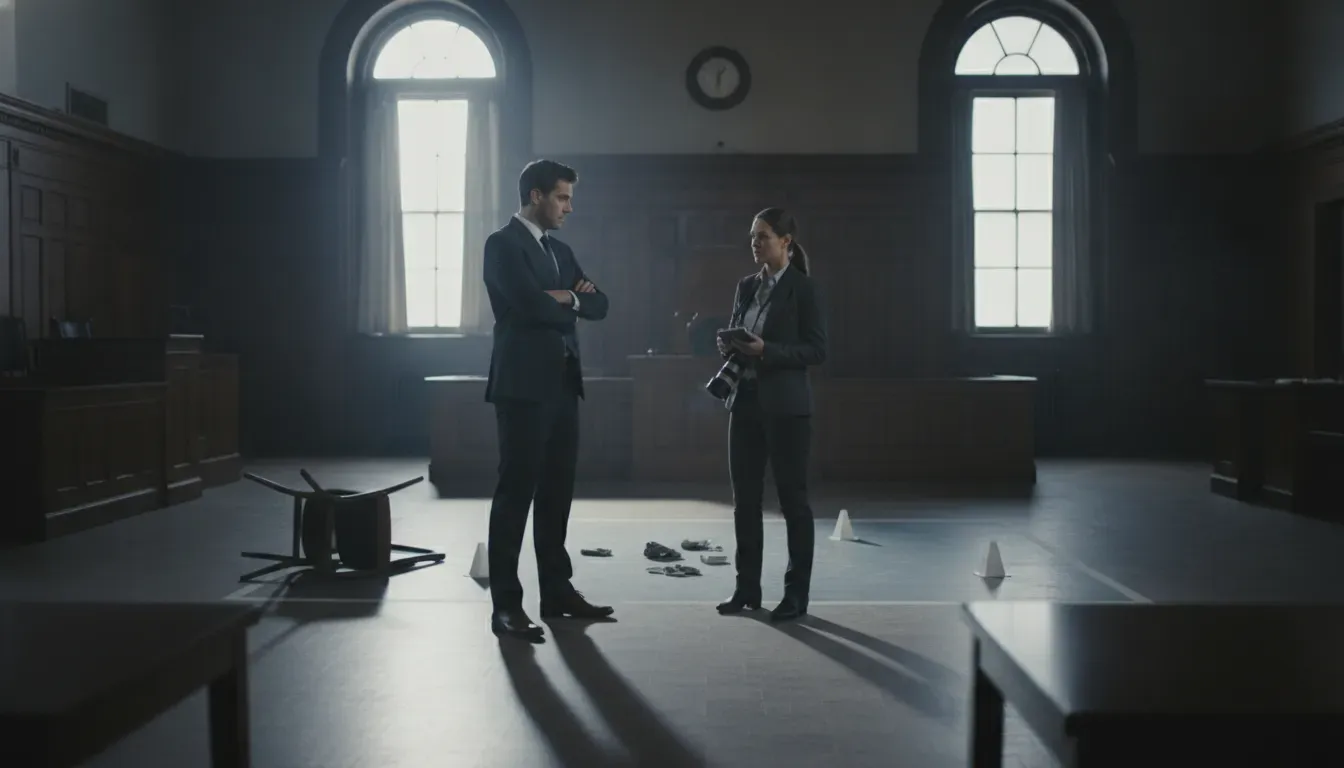
No single item automatically proves self-defense. A reliable defense account usually requires a detailed timeline supported by physical evidence, witness information, communications, medical records, and forensic work. Prompt investigation matters because video can be overwritten, memories can change, and physical conditions at a scene may no longer be available for inspection.
Evidence can affect charging decisions, motions, negotiations, and trial presentation. An Arkansas State Police investigation may be submitted to a prosecutor for a case-specific review of whether a shooting was in self-defense. That process illustrates why the investigative record can matter beyond a short initial report. Review the Arkansas State Police self-defense investigation example as background, not as a prediction of another case.
- Timeline evidence:
911 audio, dispatch records, messages, video, phone data, and witness accounts may establish the order of events.
- Scene evidence:
Photographs, measurements, lighting, sightlines, entry points, exits, and object locations may test competing accounts.
- Witness evidence:
People who saw or heard the incident, or knew about an escalating conflict, may provide context.
- Injury and medical evidence:
Injuries may be relevant to sequence, distance, positioning, and the intensity of the confrontation.
- Forensic evidence:
Ballistics, DNA, blood evidence, firearm examination, and digital records may support some details while failing to establish others.
Statements require particular care. Fear, stress, injury, and confusion can affect memory. A 911 call, police interview, text message, and later account may differ in important ways. Do not guess, fill gaps, or adopt someone else's version. Tell defense counsel what you remember, identify uncertainty, and preserve relevant communications.
Evidence rule: Do not delete messages, alter a scene, discard clothing, change a firearm, contact witnesses about what they should say, or discuss the incident publicly. Preserving the record allows counsel to test both the state's theory and the defense account.
When Can a Self-Defense Theory Fail?
A self-defense theory can face serious problems when the evidence suggests escalation, an unreasonable perception of danger, or force used after the threat ended. Inconsistent accounts, missing evidence, and confusion between lawful carry and justified use can add further weaknesses. The central question remains what the defendant reasonably believed when force was used.
Escalation and retaliation
A person who starts or materially escalates a confrontation may face statutory limits on relying on self-defense. Continuing to use force after an immediate threat appears to have ended can also allow the state to argue that the conduct was retaliatory. Chasing a person who is leaving, returning to punish that person, or making statements about revenge may become important evidence.
That does not mean a case can be decided from one fact in isolation. The defense must examine the distance between people, visibility, movement, injuries, available exits, statements, and how rapidly events unfolded. A sequence that looks simple in a report may be more complicated when tested against the physical scene.
Evidence and credibility problems
Inconsistent statements can weaken a defense even when the original event was frightening. Public posts, deleted messages, altered objects, or coordinated witness stories may create problems that make the incident harder to evaluate. A person should preserve the original record and let counsel address conflicts honestly.
Do not delete or edit relevant messages, recordings, photographs, or posts.
Do not clean the scene, move objects, discard clothing, or alter a firearm.
Do not ask witnesses to coordinate stories or conceal information.
Do not give a substantive interview or public explanation before speaking with defense counsel.
Information about first-degree murder in Arkansas can explain the charge, but it cannot decide whether justification applies. Charge classification and affirmative defenses are related but distinct legal questions.
How Do Prosecutors and Juries Analyze the Defense?
Prosecutors and juries compare the defendant's account with physical evidence, witness statements, forensic findings, and the circumstances as they appeared at the time. They may focus on credibility, corroboration, the defendant's role, the timing of force, and whether the evidence supports a reasonable belief that deadly force was necessary.
After evidence raises justification, the state must disprove self-defense beyond a reasonable doubt. The burden does not make credibility irrelevant. Prosecutors may test whether important details stayed consistent, whether the account fits the physical layout, and whether independent evidence supports or contradicts the claimed threat.
Competing narratives
The state may argue that the defendant was the aggressor, misunderstood the danger, or used force after the immediate threat ended. The defense may argue that the defendant faced unlawful deadly force and reasonably believed immediate action was necessary. The jury evaluates both narratives against the evidence rather than speculation.
A defense investigation should therefore identify both helpful and harmful facts. Counsel can then address weaknesses before trial, determine whether a motion is appropriate, evaluate expert review, and explain the legal theory accurately. Preparing for trial does not promise a result. It creates a disciplined basis for decisions.
What Does Early Defense Preparation Involve?
Early preparation protects evidence and gives counsel time to develop a fact-based self-defense theory. The work may include preserving records, locating witnesses, inspecting the scene, reviewing forensic material, comparing accounts, and evaluating motions or negotiation. Each step should be tailored to the actual charge and evidence, not copied from another case.
Preserve communications, recordings, photographs, medical records, clothing, and other relevant material.
Build a detailed timeline that identifies people, locations, distances, movement, statements, and physical evidence.
Compare the timeline with investigative reports, scene conditions, forensic material, and digital records.
Evaluate motions, expert review, negotiation, and trial presentation based on what the evidence supports.
Testing the official version
An independent defense investigation does more than repeat a police report. Counsel may examine lighting, sightlines, distances, entrances, exits, injuries, object locations, and the sequence of events. Witnesses may be interviewed separately and their accounts compared with objective evidence. Expert review may help when the disputed issue involves ballistics, medical evidence, visibility, digital records, or human perception.
Preparation also informs negotiation. A trial-ready defense gives counsel a basis to challenge unsupported allegations and discuss the evidence with the prosecutor. If the matter proceeds to trial, the attorney must organize exhibits, prepare witnesses, anticipate cross-examination, and present the justification theory clearly.
Focused Arkansas representation
Arkansas Murder Lawyers focuses exclusively on murder and homicide defense throughout Arkansas. Kevin Lemley is the firm's sole attorney, and the firm's positioning emphasizes personal attention in cases involving the most serious charges. A case still requires an individualized investigation and an honest assessment. The firm does not promise a particular outcome.
Readers can review the related murder defense strategies article for trial-preparation context. The murder charges page provides classification context. The capital murder page addresses that charge. These links support the topic cluster without replacing case-specific advice.
Takeaway: Prompt, disciplined preparation helps preserve the record and gives the defense the clearest opportunity to present the facts accurately under Arkansas law.
Frequently Asked Questions About Self-Defense in Arkansas
Arkansas self-defense questions usually involve the perceived threat, the timing of deadly force, the defendant's role, and the evidence. The answers below are general information. A lawyer must review an individual case, charging documents, and evidence before giving legal advice.
What is the legal standard for self-defense in Arkansas?
Arkansas law generally asks whether the defendant reasonably believed deadly force was necessary to prevent unlawful deadly force, its imminent use, or a qualifying violent felony. The assessment is tied to the circumstances as they appeared at the time. Arkansas Code section 5-2-607 provides the statutory framework.
Does Arkansas require a person to retreat?
The retreat question does not answer whether force was justified. Lawful presence, the defendant's role, the perceived threat, and the reasonableness of the belief still matter. Do not assume that a no-retreat principle resolves a fact-specific investigation.
What evidence supports a self-defense claim?
Potentially relevant evidence can include the scene, timeline, witness accounts, 911 records, messages, video, injuries, medical records, firearm evidence, and forensic testing. No single item guarantees a result. Counsel should preserve the complete record.
Can an initial aggressor claim self-defense?
An initial aggressor generally faces limits on relying on self-defense while continuing the confrontation. Arkansas law recognizes specific circumstances involving withdrawal and continued force. The exact words, movement, timing, and conduct must be reviewed under the statute.
What should someone do after a shooting that may involve self-defense?
Do not destroy or alter evidence, coordinate accounts with witnesses, or discuss the incident publicly. Preserve relevant records and seek legal advice before making substantive statements. Prompt legal advice can help protect evidence. It can also identify issues requiring investigation.
Speak With an Arkansas Murder Defense Attorney
Self-defense cases often turn on a detailed review of the evidence, timeline, and circumstances surrounding the incident. General information cannot determine whether a particular defense applies.
Arkansas Murder Lawyers handles murder and homicide defense statewide. To discuss an Arkansas case with Kevin Lemley, use the firm's contact page. The firm does not promise a particular outcome, and each case requires an individualized review.


Comments