
Jury Selection in Arkansas Murder Trials: Voir Dire
Updated: Sep 14
When a murder case reaches trial, the people who may decide it bring different experiences and assumptions. They may also have seen news about the case. Voir dire gives the court and lawyers a structured opportunity to identify concerns that could affect impartial decision-making before testimony begins.
During jury selection in arkansas murder trials, the defense attorney questions prospective jurors and listens for bias or personal circumstances. Counsel may ask the judge to consider appropriate challenges. Counsel does not personally choose jurors. The judge controls courtroom rulings. See the Arkansas Judiciary's explanation of voir dire.
Because the juror pool is selected through a random process, preparation matters more than trying to predict who will appear. A defense lawyer must learn what the panel understands and what it may have encountered. Counsel must also assess whether each person can evaluate evidence under the court's instructions.
That work begins with understanding what voir dire is designed to accomplish and why it can matter in a serious homicide case. For broader Arkansas murder trial preparation, the same careful review should begin well before the courtroom opens.
What Does Jury Selection in Arkansas Murder Trials Involve?
Voir dire is the court process for questioning prospective jurors before they are seated. In an Arkansas murder trial, it helps the judge and lawyers identify relationships, prior knowledge, strong opinions, or other concerns. Those concerns could affect a juror's ability to decide the case honestly and impartially. The goal is a fair jury, not a guaranteed result.
In a serious case, impartiality matters because jurors may hear disturbing allegations, testimony, physical evidence, and arguments about a person's guilt or innocence. They must evaluate what is admitted at trial rather than rely on publicity, personal experiences, or assumptions formed before the evidence is presented.
The Arkansas Judiciary explains that voir dire means "to speak the truth" and is the term used for jury selection. Its guide also notes that the judge may ask whether prospective jurors know the parties, lawyers, or witnesses, or have read about the case in the media. Read the Arkansas Judiciary's voir dire guide.
Key takeaway: Voir dire is a screening process for impartiality. Lawyers can raise concerns, but the judge controls the courtroom rulings and jurors are not personally chosen by counsel.
What the judge does
The judge manages the process and explains what prospective jurors should expect. The judge may introduce the case, organize the panel, ask questions, rule on objections, and decide whether a stated reason justifies excusing a juror for cause. The judge's instructions control if general information about jury service conflicts with what the court says in that particular case.
What the lawyers do
Each side generally has an opportunity to question prospective jurors. Counsel may ask about a person's background, relationships, opinions, or exposure to information about the case. Those questions are intended to reveal whether a juror can remain open-minded and follow the court's instructions. If a specific concern suggests that a juror cannot be fair, an attorney may request a challenge for cause. The trial court may grant or refuse that request.
Whether the juror knows a party, lawyer, or witness.
Whether the juror has encountered information about the case.
Whether personal beliefs or experiences could affect evaluation of the evidence.
Whether the juror can decide the case based on the evidence and the law.
Voir dire does not allow either side to dictate the verdict. It also does not permit removal simply because someone seems unfavorable. It is a structured part of jury selection in Arkansas murder trials, with limits set by the court and the specific circumstances of the case.
Careful preparation helps counsel raise legitimate concerns while respecting those limits.
How Attorneys Question Potential Jurors in Arkansas Homicide Cases
In an Arkansas homicide case, jury questioning generally moves from the full panel to smaller groups and then to individual prospective jurors. The judge and lawyers ask about relationships, background, media exposure, opinions, and the ability to decide the case honestly and impartially. The judge controls the courtroom and rules on challenges.
The Arkansas Judiciary explains that voir dire is the process of jury selection and that lawyers use it to learn about particular jurors. The practical sequence may look like this:
The court introduces the case and the process.
The judge typically gives a brief introduction, identifies the case being heard, and explains what jurors should expect during the day, including the predicted trial length. The clerk may take attendance and assign numbers to the jurors present. A larger service group of prospective jurors is commonly called a panel.
The Arkansas Judiciary describes this day-of-trial process
.
- The judge asks initial questions of the entire panel.
These questions can identify whether a prospective juror knows a party, lawyer, or witness. The court may also ask whether anyone knows anything about the case or has read about it in the media. A juror's answer does not automatically decide whether that person can serve, but it gives the court and attorneys information to explore further.
- The clerk and court move prospective jurors into smaller groups.
The Arkansas Judiciary states that lawyers generally question the jury pool in smaller groups. The clerk may randomly select juror numbers and call names. This format allows questioning to become more specific without requiring every person in the larger panel to answer every question.
- Lawyers ask about background, experiences, and opinions.
Counsel may ask about employment, family or community relationships, prior legal experiences, and other background details that could affect a juror's ability to evaluate testimony. Questions may also address general feelings or opinions about the case. The purpose is not to demand a particular view. It is to determine whether the prospective juror can follow the court's instructions and consider the evidence fairly.
- The court addresses impartiality concerns.
Each lawyer has an opportunity to question each prospective juror about making decisions honestly and impartially. A relationship to someone involved in the case, strong preexisting opinions, or a conclusion that the case should be decided a certain way may raise a concern. An attorney can request a challenge for cause, but the trial court may grant or refuse that request. Other selection decisions may involve peremptory challenges, subject to applicable law and the judge's oversight.
Voir dire is a focused investigation of potential bias, not a way to guarantee a favorable verdict. Defense counsel can identify concerns and protect the client's right to an impartial jury. The judge decides procedural questions, while jurors decide the case based on the evidence and instructions.
Peremptory Challenges and Challenges for Cause: What Is the Difference?
Challenges for cause ask the court to remove a prospective juror because a stated circumstance may prevent an honest, impartial decision. A peremptory challenge allows an attorney to excuse a juror without stating a reason. Both tools can matter during jury selection in Arkansas murder trials, but neither lets counsel personally choose the jury or control the verdict.
Challenge type | What it addresses | Reason required? | Who decides whether it takes effect? |
Challenge for cause | A specific concern about impartiality, such as a relationship to a party or attorney, or having already decided how the case should be resolved. | Yes. The attorney identifies the concern and asks for removal. | The trial court may grant or refuse the request. |
Peremptory challenge | An attorney's request to excuse a juror without giving a reason. | No stated reason is required, subject to applicable legal limits. | The court manages the selection process and rules on any issue that arises. |
The Arkansas Judiciary explains when a challenge for cause may be appropriate. A potential juror may be unable to decide fairly because of a relationship in the case or a fixed view about the outcome. The same guide explains that an attorney may make a peremptory challenge without giving a reason. These are different legal mechanisms, not interchangeable labels. The Arkansas Judiciary's jury guide describes both parts of the process.
Why the distinction matters
A cause challenge focuses on whether a juror can follow the court's instructions and decide the evidence fairly. Counsel generally must identify the concern, and the judge determines whether the record supports removing that person. If the request is refused, the juror may remain unless removed through another lawful part of the selection process.
A peremptory challenge is a limited strategic tool. It may be used when counsel has concerns about how a juror's stated beliefs, experiences. Or reactions could affect the trial, even when those concerns do not establish a legally sufficient basis for cause. The purpose remains a fair and impartial jury, not a promise of a favorable result.
Takeaway: A challenge for cause depends on a stated impartiality concern and the judge's ruling. A peremptory challenge does not require a stated reason but is limited by applicable law.
General guides sometimes summarize possible strike ranges in criminal cases. Those figures should not be treated as a guaranteed number for a particular murder case. Exact strike counts, sequencing, eligibility, and rulings can depend on the charge, applicable Arkansas law, the circumstances developed during voir dire, and the trial judge's decisions. The judiciary also cautions that its general information does not replace instructions given by the judge in an individual case.
What a Defense Attorney Is Looking for During Jury Selection
During voir dire, a murder-defense attorney is assessing whether prospective jurors can evaluate the evidence fairly. Follow the judge's instructions, and set aside experiences or opinions that could affect judgment. Counsel also listens for relationships, media exposure, hardship, and credibility concerns that may require further questions or a request to excuse a juror.
Takeaway: Jury selection is an evidence-focused part of trial preparation, not a process for personally choosing jurors or predicting a verdict.
Bias, experience, and relationships
Arkansas jurors may be asked whether they know the parties, attorneys, or witnesses. Whether they have learned anything about the case, or whether they have read about it in the media. Those questions can reveal possible connections to the people involved, prior experiences with violent crime, strong views about law enforcement, or opinions about criminal accusations generally. The Arkansas Judiciary explains that lawyers have an opportunity to question prospective jurors to determine whether they can make decisions honestly and impartially. The court's jury guide describes the voir dire process.
A defense attorney is not looking for a person who automatically favors the defense. The goal is to identify whether a juror can remain open-minded, listen to testimony, evaluate exhibits, and apply the burden of proof as instructed. A person may hold a general belief about crime and still be capable of serving fairly. Conversely, a juror who appears agreeable may have a personal connection or fixed opinion that deserves closer examination.
Credibility, hardship, and ability to follow the law
Answers matter, but so do clarity and consistency. Counsel may pay attention to whether a prospective juror answers directly, acknowledges uncertainty, and can discuss sensitive experiences without allowing them to control the case. Hardship can also affect a person's ability to concentrate or remain present for a lengthy trial. The judge controls the applicable questions, rulings, and final decisions about whether a challenge is granted.
These evaluations begin well before the courtroom. A specialized attorney who prepares for trial from day one can build a case theory, review the anticipated evidence. Identify the issues likely to matter to jurors, and plan focused questions without arguing the case during voir dire. Jury selection is one part of a broader defense that may include constitutional challenges, forensic-evidence review, eyewitness-identification analysis, and examination of the State's theory. Learn more about Arkansas murder defense strategy and how case-specific preparation shapes courtroom decisions.
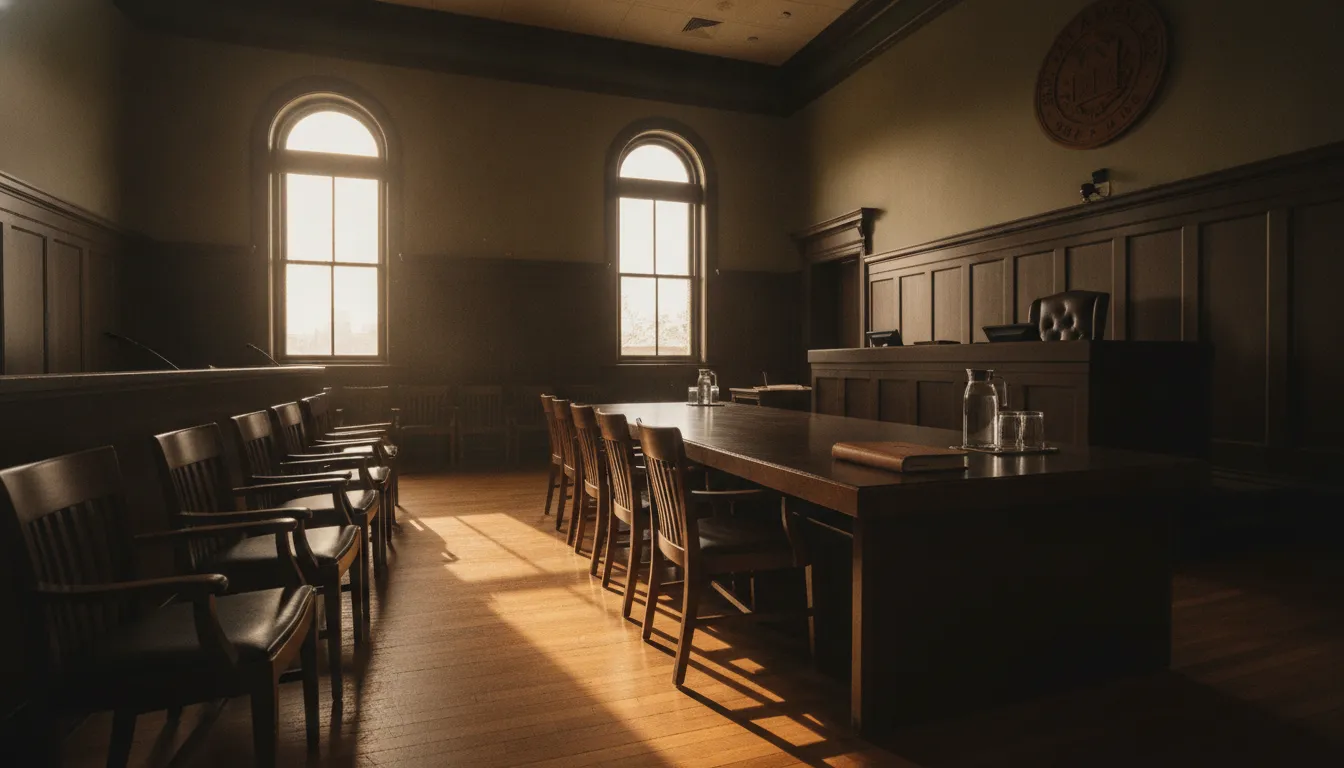
How Jury Composition Can Affect the Outcome of a Murder Trial
Jury composition can affect how jurors discuss testimony, assess credibility, and apply the court's instructions, but it does not determine a verdict. In jury selection in Arkansas murder trials, the court and attorneys work to identify jurors who can consider the evidence fairly. Follow the law, and decide the case based on the burden of proof.
Takeaway: Voir dire is intended to support an impartial jury, not to predict or promise a particular result.
Arkansas courts seat twelve people in the jury box to decide the case.
The court may also identify alternate jurors, depending on the trial and the judge's procedures.
Jurors must evaluate admitted evidence and follow the judge's instructions.
Twelve jurors, and sometimes alternates
The Arkansas Judiciary explains that twelve people will be seated in the jury box through voir dire to decide the case. A court may also select alternate jurors who can be available if a seated juror cannot continue. The exact procedure depends on the court and the circumstances of the trial. The important point is that counsel does not personally choose a preferred group of individuals. Prospective jurors come from the court's pool, and selection takes place through questioning and legally recognized challenges.
Because each juror brings personal experiences and assumptions, the group may discuss the same testimony in different ways. One juror may focus closely on a witness's opportunity to observe events. Another may be more concerned with inconsistencies or the reliability of forensic evidence. Those differences do not mean the jury is deciding by preference. Jurors are expected to deliberate together while applying the legal instructions provided by the judge.
Impartiality and the burden of proof
During voir dire, the judge and lawyers may ask about relationships to the parties, attorneys. Or witnesses; knowledge of the case; media coverage; and opinions that could interfere with fair decision-making. The Arkansas Judiciary notes that each lawyer has an opportunity to question prospective jurors about whether they can decide honestly and impartially. A juror who has already made up their mind, or who has a relationship that creates a fairness concern, may be subject to a challenge for cause. The trial court decides whether to grant or refuse that request.
Once seated, jurors do not decide whether a defendant seems deserving of punishment. They decide the issues presented at trial under the judge's instructions. In a criminal case, the prosecution must meet its burden of proof. Jurors must evaluate the admitted evidence, determine what facts have been established, and apply the legal standard the court gives them. Jury composition may influence the dynamics of discussion, but it cannot replace proof or cure unreliable evidence.
That is why voir dire is only one part of broader Arkansas murder trial preparation. Reviewing the allegations, investigating evidence, assessing witnesses, preserving objections, and developing a legally supported defense remain central to trial readiness. The judge controls courtroom rulings and instructions, while the jury's responsibility is to reach an impartial decision from the evidence presented.
For general procedural information, see the Arkansas Judiciary's guide to the day of trial. Court procedures can vary with the case and courtroom, so this overview is not individualized legal advice.
Frequently Asked Questions
How many jurors are selected for a murder trial?
In an Arkansas jury trial, voir dire results in twelve people being seated in the jury box to decide the case. The court may summon and screen a larger panel first, and the final selection can also involve alternates or other case-specific procedures. The judge controls the process in the particular courtroom. The Arkansas Judiciary explains the voir dire process.
How does a defense attorney identify a biased juror?
Defense counsel asks questions about a prospective juror's background, relationships with the parties or attorneys, knowledge of the case, media exposure, and opinions about the issues. The goal is to determine whether the person can decide honestly and impartially, not to select someone who favors the defense.
What disqualifies someone from serving on a jury in Arkansas?
A specific concern may support a challenge for cause, such as a relationship with a party or attorney, or having already decided how the case should be resolved. The attorney must request the challenge, and the trial court may grant or refuse it. Eligibility and cause questions depend on the facts and the judge's rulings.
How long does it take to select a jury for a murder trial?
There is no reliable fixed timeline. Selection may take longer when the case has extensive publicity, many prospective jurors know people involved, or the court must explore sensitive hardship or impartiality concerns. The judge directs the process, while both sides question jurors and raise appropriate challenges.
Do all jurors have to agree in a murder case?
Jury selection does not determine the verdict or guarantee agreement. It is intended to seat an impartial jury, while the judge gives the governing instructions and the jurors decide the case under those instructions. The exact rules can depend on the charge and courtroom, so a defendant should discuss the case with counsel.
Contact us about your Arkansas murder charge
Jury selection is one part of preparing for trial. A defense attorney can help you understand how voir dire may apply to the facts and issues in your case. To request a confidential case review with Arkansas Murder Lawyers about an Arkansas murder or homicide charge, contact us through our confidential case review form.



Comments