
What Happens at a Preliminary Hearing in an Arkansas Murder Case?
A preliminary hearing is an early courtroom proceeding. It tests whether the State has enough evidence to continue a criminal case, not whether the defendant is guilty at trial.
In general, what happens at a preliminary hearing in an Arkansas murder case is straightforward. The State presents evidence supporting probable cause. The defense may question witnesses and challenge the State's showing. The judge decides whether the case should move forward. The hearing is not a full trial. The judge does not decide guilt beyond a reasonable doubt at this stage.
For a defendant and family, the proceeding can still have important consequences. Counsel may need to examine the charge, preserve issues, assess the State's evidence, and make careful decisions about whether to present defense evidence. The approach may also differ depending on whether the accusation involves capital murder, first-degree murder, or another homicide charge. Understanding the distinction between those charges can provide useful context, including through this overview of Arkansas first-degree murder defense.
Because county practice and case posture can vary, general information cannot replace advice about the specific case. The next section explains what this hearing is designed to decide and how it differs from other early stages of an Arkansas prosecution. Families seeking case-specific guidance can contact Arkansas murder defense lawyers.
What Happens at a Preliminary Hearing in an Arkansas Murder Case?
A preliminary hearing is an early, adversarial court proceeding that tests whether the State has enough evidence to continue prosecuting a murder charge. It is not a trial and does not decide whether the defendant is guilty. The court considers probable cause, while a jury at trial must apply the much higher standard of proof beyond a reasonable doubt.
Key takeaway: A preliminary hearing is a screening stage, not a final judgment. The State generally presents evidence supporting the charge, and defense counsel may question witnesses, challenge the State's showing, and make legal arguments. The hearing can shape the case, but it does not replace trial preparation.
What the hearing is designed to decide
The central question is whether probable cause supports continuing the case. In practical terms, the judge examines whether the evidence provides a reasonable basis to believe that a crime was committed and that the defendant may have committed it. The State does not have to prove guilt beyond a reasonable doubt at this stage. That standard applies at trial.
- Probable cause:
the lower threshold used to determine whether the case may proceed.
- Proof beyond a reasonable doubt:
the trial standard the prosecution must meet for a conviction.
- Possible hearing activity:
testimony, questioning of witnesses, review of evidence, and arguments by counsel.
Because the hearing focuses on the State's initial showing. Defense counsel must make strategic decisions about what to challenge and what information to preserve for later motions or trial. Calling defense witnesses or presenting evidence may be appropriate in some cases, but it is not an automatic requirement. The right approach depends on the charge, the available evidence, and the risks of revealing defense strategy too early.
Stage | Main question | What it does not decide |
Preliminary hearing | Is there probable cause to continue? | Whether the defendant is guilty |
Trial | Has the State proved every required element beyond a reasonable doubt? | Whether earlier stages were unnecessary |
How it differs from other early court stages
A first appearance generally addresses a defendant's initial presentation before the court and immediate procedural matters. An arraignment is the stage at which the defendant is formally informed of the charge and asked to enter a plea. A preliminary hearing addresses probable cause. A trial is different again: the prosecution must prove every required element beyond a reasonable doubt before a jury or judge can enter a conviction.
The charge itself also matters. A person facing first-degree murder may need a different case assessment than someone facing capital murder or another homicide allegation. For background on that distinction, review the firm's Arkansas first-degree murder defense information. County practices and the exact posture of a case can vary, so general information cannot predict what will happen in a particular courtroom.
What Does the Judge Decide at a Preliminary Hearing?
A judge at an Arkansas preliminary hearing decides whether the State has shown probable cause to continue the criminal case. The court is not deciding whether the defendant is guilty beyond a reasonable doubt. Instead, the judge evaluates the State's initial evidence, allows the defense to challenge that showing, and determines the case's procedural posture under the facts and charges presented.
The key question is whether the evidence supports probable cause, not whether it proves guilt.
At the hearing, the State generally presents witnesses and other evidence intended to connect the alleged offense to the defendant. Defense counsel may cross-examine those witnesses and make legal arguments about weaknesses in the State's presentation. That questioning can test a witness's ability to observe, remember, or identify what happened, as well as whether the testimony actually supports the elements of the charged offense.
The judge may consider issues such as:
Whether the evidence indicates that a crime was committed.
Whether the evidence reasonably connects the defendant to that offense.
Whether the State's witnesses and exhibits support the specific charge filed.
Whether the case should proceed in its current posture based on the evidence presented.
The defense does not have to prove innocence at this stage. Counsel may focus on exposing gaps in the State's evidence without presenting the full defense strategy. Whether to call defense witnesses or introduce defense evidence is a case-specific tactical decision. Cross-examination can also create a record of testimony that matters later, but counsel must weigh that benefit against revealing information prematurely.
Possible procedural outcomes include binding the case over for further proceedings. Dismissal may occur when the probable-cause showing is legally insufficient. The case posture may also change based on the charges, evidence, and court ruling. A bind-over is not a finding of guilt, and a dismissal at this stage is not something a defendant should assume will occur. The State's ability to continue or pursue charges can depend on the circumstances and applicable Arkansas procedure.
The hearing also does not replace motions, discovery, investigation, or trial preparation. A judge may not resolve every question about whether evidence will ultimately be admissible or whether a jury will find the testimony credible. Those issues may require separate litigation or a trial record. Because the consequences can differ between capital murder, first-degree murder, and other homicide charges, the evidence and charge classification should be reviewed with counsel. The firm's Arkansas murder defense lawyers serve clients statewide, but general information cannot predict what a particular judge will decide.
Does the Defense Have to Present Evidence at a Preliminary Hearing?
A defense generally does not have to present its own evidence at an Arkansas preliminary hearing. The hearing tests whether the State has enough evidence to establish probable cause, not whether the accused is guilty beyond a reasonable doubt. Defense counsel may focus on cross-examination, legal arguments, and weaknesses in the State's presentation without revealing the full trial strategy.
The defense can challenge the State's case without putting on a separate defense case. Whether to introduce evidence is a tactical decision that depends on the charges, the discovery available, the witnesses, and the risks of exposing information too early.
Cross-examination may be the central defense tool
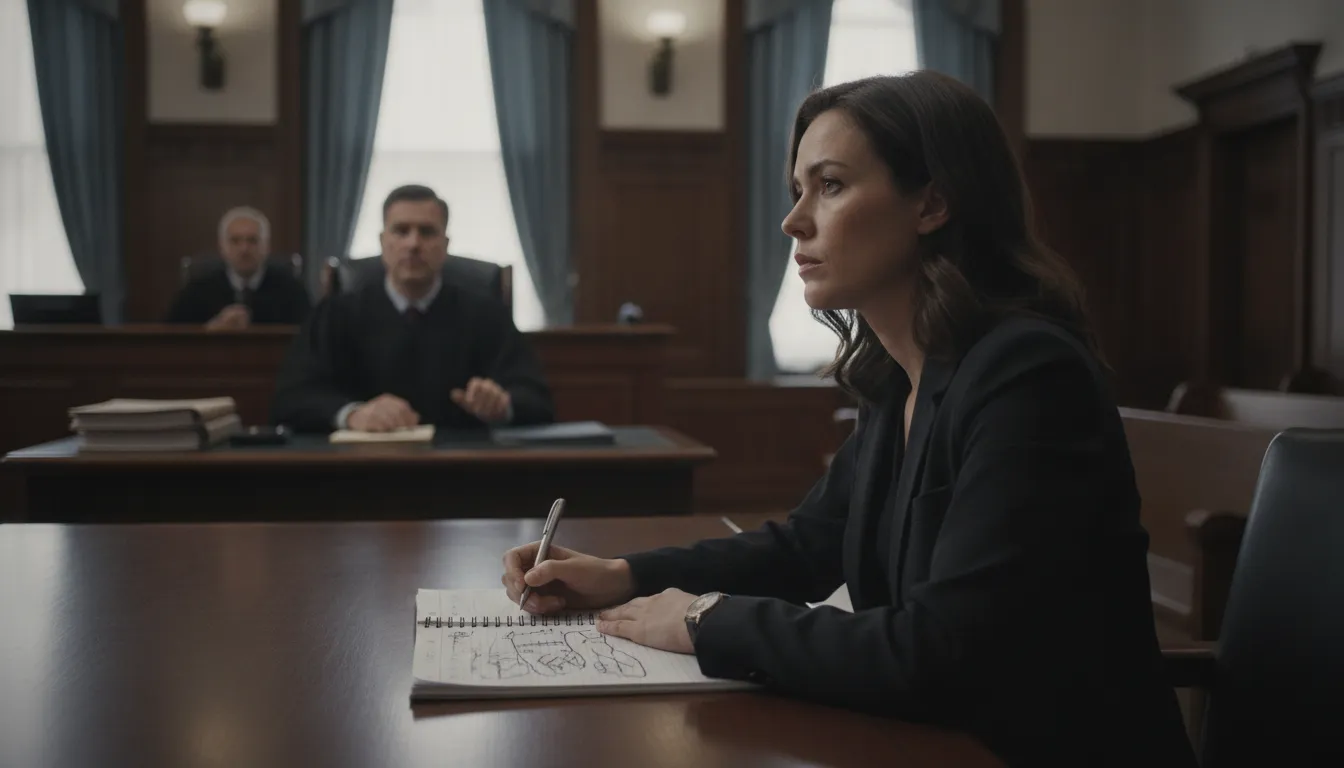
At a preliminary hearing, the prosecution may call witnesses or present other evidence. Defense counsel can question those witnesses and test the reliability of what the State is offering. That may include examining inconsistencies, gaps in a witness's knowledge, identification issues, or whether the testimony actually supports probable cause. A preliminary hearing is an adversarial proceeding in which both sides may question witnesses, although the precise procedure can depend on the court and case posture. A preliminary hearing generally focuses on whether enough evidence exists for the case to continue.
Why counsel may avoid calling defense witnesses
Presenting defense evidence can sometimes help counsel address a specific issue. It can also disclose testimony, lock in a witness's account, or give the prosecution information that may shape later preparation. Evidence questions can involve admissibility and constitutional issues. They can also involve the difference between challenging the State's proof now and litigating a suppression motion later. The best choice is case-specific, not a rule for every murder charge.
Cross-examine the State's witnesses about reliability and personal knowledge.
Identify gaps in the evidence supporting probable cause.
Evaluate whether an objection or later motion is the proper vehicle for an admissibility issue.
Protect the defense strategy while preparing for the next stage of the case.
The accused should not assume that testifying or calling a particular witness is necessary simply because a preliminary hearing is scheduled. Counsel must assess the available evidence and the potential consequences before making that decision. For defendants and families seeking counsel focused on homicide cases, defense from the start of a homicide case can include evaluating the hearing strategy without treating the hearing as a trial.
How the Outcome of a Preliminary Hearing Affects the Rest of the Case
A preliminary hearing can shape an Arkansas murder case, but it does not decide guilt or innocence. The judge considers whether the State has shown probable cause to continue. The ruling may affect the case's posture, the defense's next motions, and how counsel prepares for discovery, negotiations, and trial.
The hearing is an important checkpoint, not the final verdict. A bind-over means the case continues; it does not mean the State has proved the charge beyond a reasonable doubt.
Bind-over, continuation, or a change in posture
If the court finds sufficient probable cause, the defendant may be held to answer and the case moves forward. That outcome is not a finding that the defendant committed murder. It means only that the prosecution has met the lower threshold required at that stage. The exact procedure can depend on the charge, the court, and the case's posture.
A court may also dismiss or otherwise alter the case's posture if the State's showing is legally insufficient. That possibility should be taken seriously, but no attorney can promise dismissal based only on the fact that a preliminary hearing is scheduled. In some circumstances, a case can be dismissed at this stage, while other legal avenues may still affect whether and how the prosecution proceeds.
The record can guide discovery and motions
What witnesses say, what they do not say, and how they respond to cross-examination can give defense counsel an early way to assess the State's theory. Counsel should carefully preserve the hearing record and obtain the transcript or recording when available. The testimony may later help identify inconsistencies, narrow factual disputes, or shape requests for additional discovery.
The hearing can also inform motion strategy. Depending on the evidence and the facts of the arrest, counsel may investigate suppression issues, Miranda violations, coerced statements, unreliable identification procedures, or other constitutional concerns. A preliminary hearing is not always the place where every objection is finally decided. Instead, it can expose issues that require separate litigation and deeper investigation.
Review the ruling and the stated basis for probable cause.
Compare hearing testimony with reports, recordings, physical evidence, and later discovery.
Identify witnesses or evidence that require follow-up investigation.
Reassess whether additional motions or expert review are needed.
Prepare the defense for the next court stage without revealing unnecessary strategy.
The effect of the ruling also depends on the charge. A person facing a first-degree murder allegation may need to understand how the State is classifying the alleged conduct and what defenses may apply. Learn more about Arkansas first-degree murder defense while keeping in mind that the charge and evidence in each case require individual legal analysis.
Because the hearing record can influence decisions long after the courtroom closes, defendants and families should discuss the result promptly with counsel. Arkansas Murder Lawyers handles murder and homicide defense throughout all 75 Arkansas counties, with trial preparation beginning at the earliest stages.
What Your Attorney Should Do at the Preliminary Hearing Stage
A preliminary hearing is an early test of the State's evidence, not a miniature trial. Your attorney should use this stage to confirm the case's procedural posture, examine the probable-cause showing, protect constitutional issues, and identify weaknesses in testimony or proof. The defense should also continue preparing for trial because the hearing's result does not define the entire case.
The right approach is both immediate and long-term: challenge the State's showing now while preserving every issue and lead that may matter later.
- Confirm the exact posture and charges.
Counsel should determine whether the matter is at a preliminary hearing, rather than a first appearance or arraignment, and verify the precise allegations. Capital murder, first-degree murder, second-degree murder, and accomplice-liability allegations can involve different factual and strategic concerns. County practice and timing may vary, so the attorney should explain what this hearing can decide and what it cannot.
- Investigate the State's evidence and witnesses.
The prosecution generally presents witnesses or other evidence to support probable cause. Defense counsel should review reports, recordings, physical evidence, and available discovery, then investigate the witnesses' backgrounds, perspectives, inconsistencies, and potential sources of bias. A hearing can expose gaps in the State's account, but counsel should avoid treating it as the only opportunity to develop the defense.
- Preserve constitutional and evidentiary issues.
The attorney should identify possible illegal searches, Miranda concerns, coerced statements, unreliable identification procedures, and other constitutional issues. Not every issue is fully decided at the preliminary hearing. Counsel should make appropriate objections, document the record, and plan any later suppression or related motions without revealing more of the defense strategy than the case requires.
- Prepare focused cross-examination and legal arguments.
Cross-examination should test what each witness actually knows and what the witness previously said. It should also test whether the testimony establishes probable cause for the charged offense and the defendant's alleged involvement. Counsel may decide whether presenting defense evidence serves the client's interests. That decision is tactical and case-specific.
Keep the family informed and the case trial-ready.
Families may be coordinating counsel while a defendant is incarcerated or unable to do so independently. The attorney should explain the hearing process, likely next procedural steps, and what information the family can safely provide. Arkansas Murder Lawyers states that it serves clients across all 75 Arkansas counties and prepares cases for trial from day one. Kevin Lemley is the firm's lead attorney. For case-specific guidance, families can review
Arkansas murder defense services
.
The hearing is one point in a larger defense investigation. A careful attorney uses it to test the prosecution's evidence without losing sight of the motions, expert work, witness development, and trial preparation that may follow.
Frequently Asked Questions
What does the judge decide at an Arkansas preliminary hearing?
The judge decides whether the State has shown enough evidence to establish probable cause that an offense occurred and that the defendant may be connected to it. This is not a decision about guilt beyond a reasonable doubt, and county procedure and the case posture can affect how the hearing is handled.
Can a murder case be dismissed at a preliminary hearing?
It can be dismissed or otherwise changed if the evidence presented does not support probable cause. A dismissal at this stage does not necessarily prevent the State from pursuing the matter later through a different charging process. So the exact effect should be reviewed with Arkansas counsel.
Does the defendant have to present evidence?
No. The State generally presents its evidence first, and defense counsel may cross-examine witnesses and challenge the State's showing. Whether to call witnesses or present other evidence is a case-specific tactical decision, not an obligation to prove innocence.
What happens after the preliminary hearing?
If the judge finds probable cause, the case generally moves forward to later proceedings, which may include further investigation, motions, discovery, and trial preparation. A preliminary hearing is separate from a first appearance and arraignment, and the next step depends on the charges and court posture.
Does the defendant return to custody after the hearing?
That depends on the defendant's existing custody and release status, any bond or detention order, and the judge's ruling. A preliminary hearing does not automatically determine release in every Arkansas case. Counsel should confirm what the written order requires before leaving the courthouse.
Contact us about your preliminary hearing
Timing and case posture can shape what happens before, during, and after a preliminary hearing. Case-specific guidance can help you understand the immediate procedural issues, protect your rights, and make informed decisions without promising a particular result. Arkansas Murder Lawyers provides statewide service across Arkansas, with direct access to attorney Kevin Lemley.



Comments